


The recognition of the Siciliano Horse by the Ministry of Agriculture in February 2024 as one of the 27 Italian horse breeds with limited circulation has focused the spotlight of professionals and enthusiasts on Sicily and its three native horse breeds, which also include the Sicilian Oriental Thoroughbred and the Sanfratellano. We dedicate an article to each of these three races, asking Dr Ignazio Mannino, President of the Equestrian Growth Institute of Catania, what are the objectives that the Institute aims to achieve in the coming years in favor of these breeds that place Sicily at the centre of biodiversity of the entire Mediterranean basin, certainly not only geographically: “The promotion of native Sicilian horse breeds is an essential value, the Institute of Horse Growth for Sicily of the Sicilian Region, in synergy with the directives issued by the Regional Department of Agriculture, Rural Development and Mediterranean Fisheries, In the last two years of its government, it has put in place strategies to consolidate and improve the existing genetic heritage, guaranteeing its protection and preservation. The recognition of the Siciliano breed has triggered virtuous mechanisms among our three races, which tell the history of Sicily in terms of culture, traditions, and biodiversity. We also plan to export the Sicilian breeds beyond the island, making known the moral qualities and excellent attitudes of our horses, both in sports and equestrian activities in general, to produce horses that can compete with the many breeds that have today invaded the Italian and Sicilian markets. This goal will be carried out in collaboration with FISE, the Associations of breeders of Sicilian breeds, universities, local administrations and farmers who represent the real reference point for sector policies”.

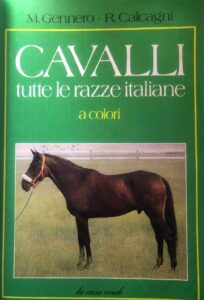
30 years of commitment. Between the ’70s and ’80s, the traces of the Siciliano Horse were lost. Its inclusion among the Italian breeds was still noted in 1985 by Bernardo Meloni, president of the National Institute for the Italian Horse, and Prof. Antonio Catalano of the University of Parma, in their book “HORSES, all Italian breeds”. The reading in the 90s of those pages inspired Francesco Russo, the Sicilian breeder and founder and president of A.R.A.C.S. (Regional Association of Breeders of the Sicilian Horse), regarding the large number of horses bred as semi-brads or brads scattered across the Sicilian mountains, which were generically referred to as Indigenous Siciliano. They were the result of a secular interaction between the many breeds of horses that arrived in Sicily with the conqueror of turn, starting from the Oriental horses arrived with the Greeks, followed by the first African Carthaginian subjects in the west of Sicily, and then from the Roman Equus italicus, to which were added over the centuries the Arab horses and the Berbers important by thousands by the Muslims conquerors, the Norman ones of the Christian reconquest and the Spanish horses of the Bourbons of the Kingdom of the Two Sicilies to end, after the unification of Italy, with the influences derived from the needs of the military uses of horses for the Italian army cavalry, since many horses and mules of the Italian Army have long been bred in Sicily. Drawing inspiration from those pages, friends Francesco Russo, Bruno Morello, Vincenzo Allegra, and Benedetto Salamone met for the first time around a table to organise the first program of identifying some surviving subjects in Sicily among indigenous horses attributable to the morphological characteristics of the Siciliano horse. With constancy, dedication, self-sacrifice, courage and always straight back, Russo went on his way not “looking at anyone” for almost thirty
years until he reached the first goal, the longest and most complex: the recognition of the breed of the Siciliano Horse. This recognition is only the beginning. The road is still long to provide Siciliano horse breeders with the education and knowledge they need to pursue excellence and professionalism, which are essential today. This versatile Horse already excels in fields such as trekking and Work Equitation, and it is poised to excel soon in show jumping and dressage. The following objectives related to the breed will be pursued in this new context today, finally very favourable, always through the complete collaboration between A.R.A.C.S., the regional institutions and the group of scientific specialists from the Institute of Horse Growth, the Zoo prophylactic Regional Institute, the Universities of Catania and Messina and the A.N.A.R.E.A.I. (National Association for Italian Equine and Asinine Breeds) which has made a significant contribution in the final and crucial phase of the race recognition operations. A basilar moment for the Siciliano was when, for the first time, he paid attention to the experts and national public opinion during “The General States of the Horse in Sicily “, conceived and organised by Rodolfo Lorenzini, together with a large qualified group of Sicilian experts, within the initiatives of “Sicily, Equestrian Park of the Mediterranean” ( www.siciliapem.it ) which saw the profitable and decisive participation of A.N.A.R.E.A.I,

The Morphological Reviews. Between the date of the breed’s recognition and the end of 2026, a large number of morphological reviews will be carried out throughout the island, enabling breeders to have their subjects examined for registration in the Stud Book of the Siciliano Breed. Breed experts from the Horse Growth Institute, A.N.A.E.R.A.I., and A.R.A.C.S. examine the subjects, completing a detailed morphological evaluation card with measurements of a comprehensive series of parameters. They take a sample of horse hair and blood to submit the subject to a series of genetic research that, on several subjects, which at the end of the study will be very high, will provide beneficial data to understand the genetic components that have helped to form the Siciliano horse and indications to decide in which direction the selections and the matings should go as regards the future.
From the Breed Standard of the Siciliano Horse. The areas of origin of the Siciliano Horse encompass the entire island of Sicily, with a notable presence in the provinces of Palermo, Enna, Ragusa, and Messina. The attitudes encompass equestrian tourism, dressage, three-day events, jumping, work equitation, and light carriage driving. It is a meso- and mesodolicomorph horse with a bay, black, or chestnut coat and varying shades of grey. The 14 morphological conformations of its parts are listed and described with precision in the breed standard approved by the Ministry of Agriculture, which serves as a guide for breeders who wish to participate in morphological reviews with their horses, available from A.R.A.C.S. and A.N.A.R.E.A.I.
The biometric data expressed in cm. are:
Males: Height at withers: 153-165. Chest circumference 180-190. Hip circumference 19-22.
Females: Height at the withers: 152-163. Chest circumference 170-180. Hip circumference 19-22.
Towards a future of knowledge and competence. Without this long work of thirty years, the Sicilian Horse would have been ignored, abandoned, and marginalised, despite having very peculiar characteristics that have already allowed him to achieve sporting goals at the national level in Working Equitation, Dressage and will soon begin in show jumping to be able to compete in the future also in the Three days Event, thanks to modern and innovative breeding and training that produce subjects with “beauty”, wonderful behaviours, and equitation technique of excellent quality. Between 2021 and 2024, the Siciliano obtained excellent results at national and European competitions in Working Equitation by Granpasso, son of a Sicilian mare from the Rocca breeding farm, ridden by the young amazon Giusi Calafiore.

The Siciliano stallion, Rodomonte della Rocca, won the Winter Trophy 2023 for 4-year-old horses (ranking first in each of the three different specialities of working equitation) mounted by David Jimenez Romeri. The equestrian foundations of these two horses were built using natural methods, never coercive and violent, which began immediately after the birth of the foals, to have then subjects of great moral qualities: docile, educated, with a constant and pleasant frequentation with the man to build a strong and indelible connection based on mutual trust and security, also through optimal living conditions in wild and semi-wild conditions. This process is a result of an avant-garde breeding philosophy, which prioritises science and knowledge over mere tradition and empiricism. It is hoped that all this can become the heritage of every Sicilian horse breeder who wants to embrace the future and innovation, ultimately forming professional figures who serve in the various sectors related to horses, without which the “Horse System of Sicily” will never enter the markets that truly matter.
To buy Siciliano horses and private mounts.
The contact for getting in touch with the numerous breeders of Sicilian horses scattered in Sicily is the Regional Association of Sicilian Horse Breeders (A.R.A.C.S.).
Info ARACS: Roberto Russo. Tel. +39 366 1953665.
Facebook: ARACS SICILIA: www.facebook.com/aracsi.sicilia
Instagram: ARACS SICILIA: www.instagram.com/aracsi.sicilia
To enrol your horses in a Morphological review.
Head of Sector at A.R.A.C.S.: Aldo Drago. Tel. 320 3834154

For public mounts with approved Siciliano stallions.
The Equestrian Growth Institute of Catania has purchased the first approved Siciliano stallion, Trionfo Siculo II°, to be used for public mounts. They can be made at the Ambelia estate.
Other Siciliano stallions will be available shortly.
Contact: www.cavallisicilia.it
A.N.A.R.E.A.I.
LG Central Office
E-Mail: info@anareai.it
Phone: +39 0521 680 777
www.anareai.it
Text and photos by Franco Barbagallo.
Leave a Reply